What You’ll Learn
- What belongs on a calendar
- What belongs on a task list
- How to turn a vague task into a visible next action
- Why buffer time makes plans more realistic
Time-Specific or Flexible?
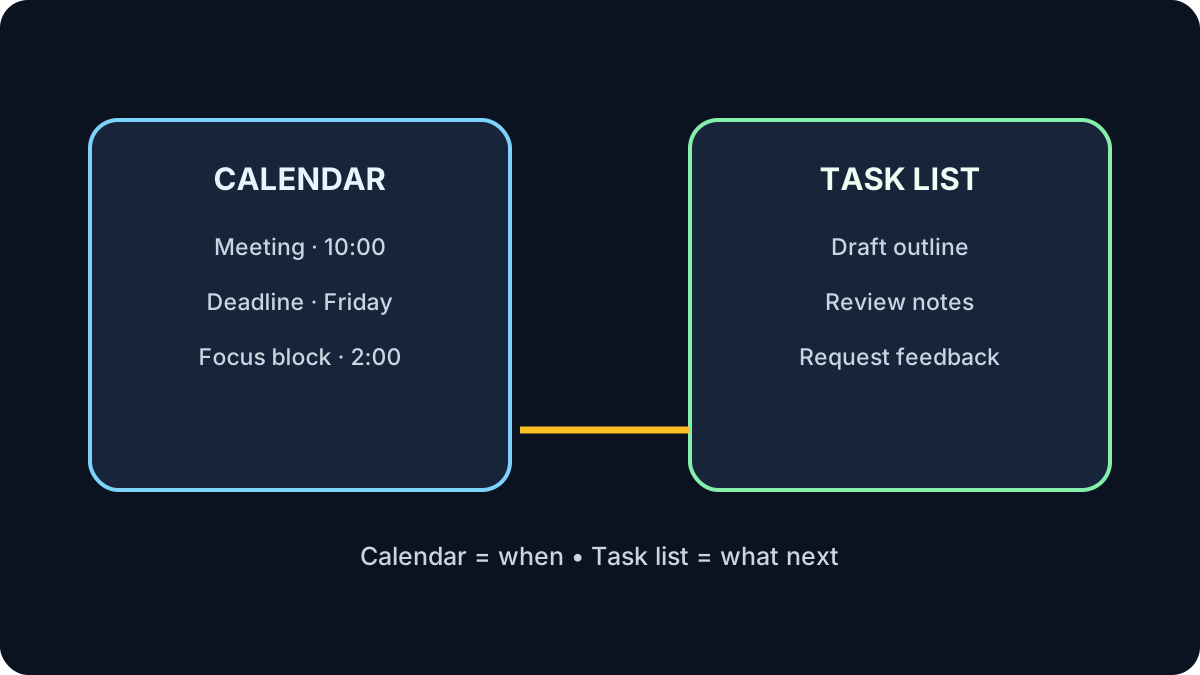
Put appointments, meetings and real deadlines on the calendar. Put work that can happen within a window on the task list. Reserve calendar time for demanding tasks when it helps you actually do them.
Plan less than 100 percent
Travel, setup, breaks, interruptions and recovery all take time. A completely full calendar is already unrealistic.
Write the Next Visible Action
“Workshop” is a topic, not a task. “Draft the three learning outcomes” describes an action you can begin. Add a real date only when the date matters.
Try It: Place the Work
Sort these fictional items: online class Tuesday at 7 p.m.; buy printer paper this week; submit an application Friday; outline a lesson when time allows.
Show one sensible answer
Calendar: class and Friday deadline. Task list: paper and lesson outline. Reserve a calendar block for the application work before Friday.
Quick Knowledge Check
Where does a meeting belong?
Answer
On the calendar because it happens at a specific time.
Why write a next action?
Answer
It turns a vague project into something concrete you can start.
What to Remember
- Use the calendar for time-specific commitments.
- Use a task list for flexible next actions.
- Reserve focus time when necessary.
- Leave room for reality.
Next: Build a Simple Workflow
Connect intake, decisions, action and review into one repeatable process.
Continue to Lesson 4 →