What You’ll Learn
- What artificial intelligence and generative AI mean
- Where AI already appears in everyday life
- What AI does well and where it can fail
- How to begin with privacy and human judgment intact
AI Finds and Uses Patterns
Artificial intelligence is a broad name for software designed to perform tasks that often require human-like abilities, such as recognizing speech, identifying patterns or generating language.
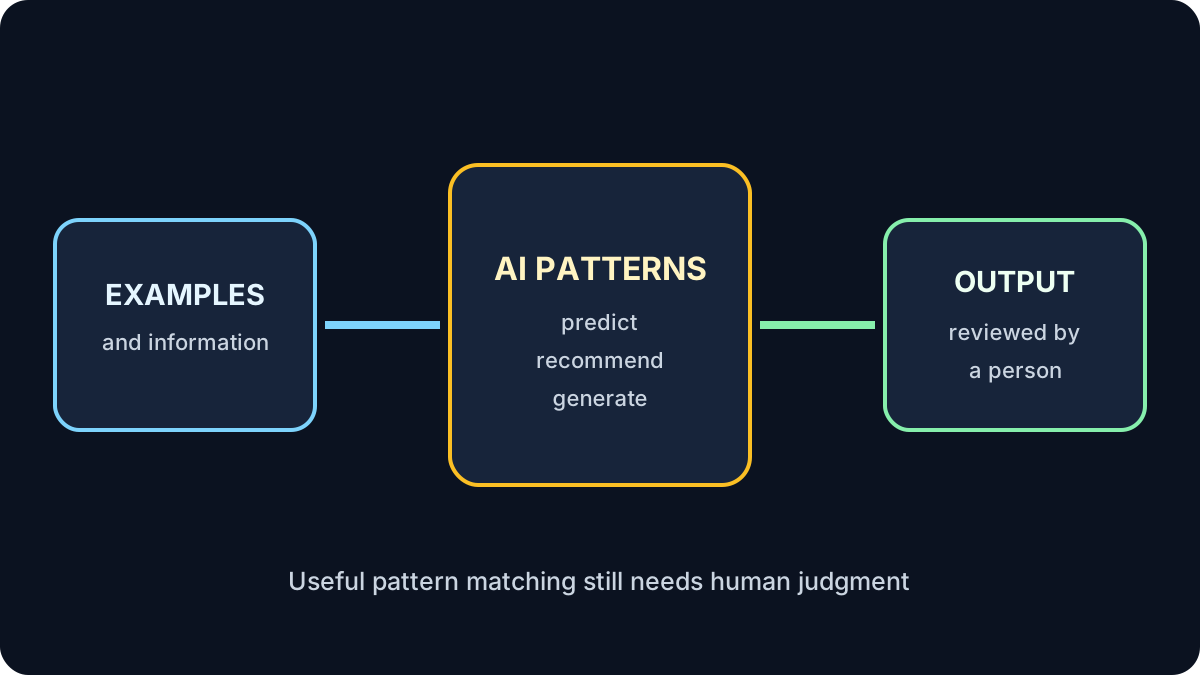
Machine learning is one way of building AI: the system learns patterns from examples rather than receiving a separate hand-written rule for every situation.
Generative AI creates new text, images, audio or code by predicting what should come next based on patterns learned during training.
Prediction is not understanding
A language model can produce a fluent answer without knowing whether that answer is true. Useful output and verified fact are not the same thing.
Where You Already Meet AI
What AI Is Good At—and Not Good At
AI is often useful for first drafts, summaries, idea organization, pattern spotting and repetitive transformations. Its output still depends on the task, instructions and information available.
AI can invent facts, miss context, repeat bias, expose information shared with the wrong service and sound certain when it is wrong. It should not quietly replace accountable human judgment.
Keep sensitive information out
Do not paste passwords, financial details, client information, private workplace material or confidential documents into a consumer AI tool. Use fictional or public information while learning.
Try It: Is AI a Sensible Helper?
Decide whether AI is a reasonable helper, needs careful human review, or is the wrong final decision-maker.
- Brainstorm five names for a fictional book club.
- Decide whether a person qualifies for a medical treatment.
- Turn your own non-sensitive notes into a draft checklist.
- Calculate the final amount on a legal settlement.
Show a sensible answer
Helper: fictional book-club names and a draft from non-sensitive notes.
Careful review: calculations can be checked, but a legal settlement requires authoritative documents and qualified human oversight.
Wrong final decision-maker: treatment eligibility is a high-stakes medical decision for qualified professionals and the affected person.
Quick Knowledge Check
1. Does fluent AI writing prove that the answer is true?
Answer
No. Generative AI predicts plausible output; it does not automatically verify it.
2. What makes generative AI different?
Answer
It creates new output, such as text or images, from patterns and instructions.
3. What information should a beginner use for practice?
Answer
Use fictional, public or deliberately sanitized information—not sensitive or confidential details.
What to Remember
- AI is software that uses patterns to produce an output.
- Generative AI creates new content; it does not guarantee truth.
- AI can assist with a task without replacing human responsibility.
- Use low-risk information while learning.
- Check important output before acting on it.
Next: Prompt Engineering
Learn how clear goals, context and constraints help an AI produce a more useful first response.
Continue to Lesson 2 →