What You’ll Learn
- What a prompt is
- Why useful context improves an answer
- How to use a five-part prompt structure
- How to review and improve an AI response safely
What Is Prompt Engineering?
A prompt is simply the instructions you give an AI.
Prompt engineering is the process of writing those instructions clearly enough that the AI understands your goal, your audience, and the kind of response you're looking for.
Many people believe better prompts come from clever wording. In reality, better prompts usually come from providing better context.
Context Changes Everything
Imagine you're walking through a grocery store when someone you've never met walks up and asks:
"Can you help me?"
You'd probably ask a few questions.
- Help with what?
- What are you looking for?
- What have you already tried?
Now imagine they instead say:
"Hi, I’m looking for gluten-free pasta for a community dinner. I’ve already checked aisle three. Can you point me to the right section?"
Suddenly helping becomes much easier.
Nothing changed about your ability to help.
The only thing that changed was the amount of context you were given.
AI works the same way.
AI Starts as a Stranger
Every new conversation with AI starts with very little knowledge about your situation.
Unless you've already shared the information, it doesn't know:
- who you are
- what you're trying to accomplish
- your level of experience
- who your audience is
- why you're asking
- what you've already tried
The AI isn't lacking intelligence.
It's lacking context.
One sentence is worth remembering:
AI is intelligent, but it isn't informed.
Until you provide context, the AI can only make educated guesses about what you need.
A Better Prompt
Compare these two prompts.
Write me an email.
The AI has to guess:
- Who is the email for?
- What's the topic?
- Should it be formal?
- How long should it be?
Write a friendly email to my manager asking to work from home tomorrow because I have a plumbing emergency. Keep it professional and under 150 words.
The second prompt isn't better because it uses special words.
It's better because it gives the AI enough information to produce a useful answer.
Try It Yourself
The easiest way to understand prompt engineering is to compare two responses.
Open your favourite AI assistant and try these prompts.
If you do not use an AI assistant, compare the two prompts on the page and predict how the answers would differ.
Prompt 1
Explain cloud computing.
Read the response before continuing.
Prompt 2
Explain cloud computing to a small business owner who has never worked in IT. Use plain English, compare it to renting instead of owning, avoid technical jargon, and keep the explanation to about five minutes of reading.
Compare the two answers.
What Changed?
The AI didn't become smarter.
You simply provided more useful context.
- Audience: Small business owner
- Experience: No IT background
- Language: Plain English
- Analogy: Renting instead of owning
- Length: About five minutes
These details help the AI produce an explanation that's much closer to what you actually wanted.
Think of AI as a New Coworker
Imagine someone joins your team today.
They're intelligent. They're eager to help. They learn quickly.
But they've never worked with you before.
Before they can do a good job, you would naturally explain:
- the goal
- the background
- who the work is for
- what success looks like
- any important constraints
You wouldn't expect them to guess.
AI is no different.
A Simple Prompt Formula
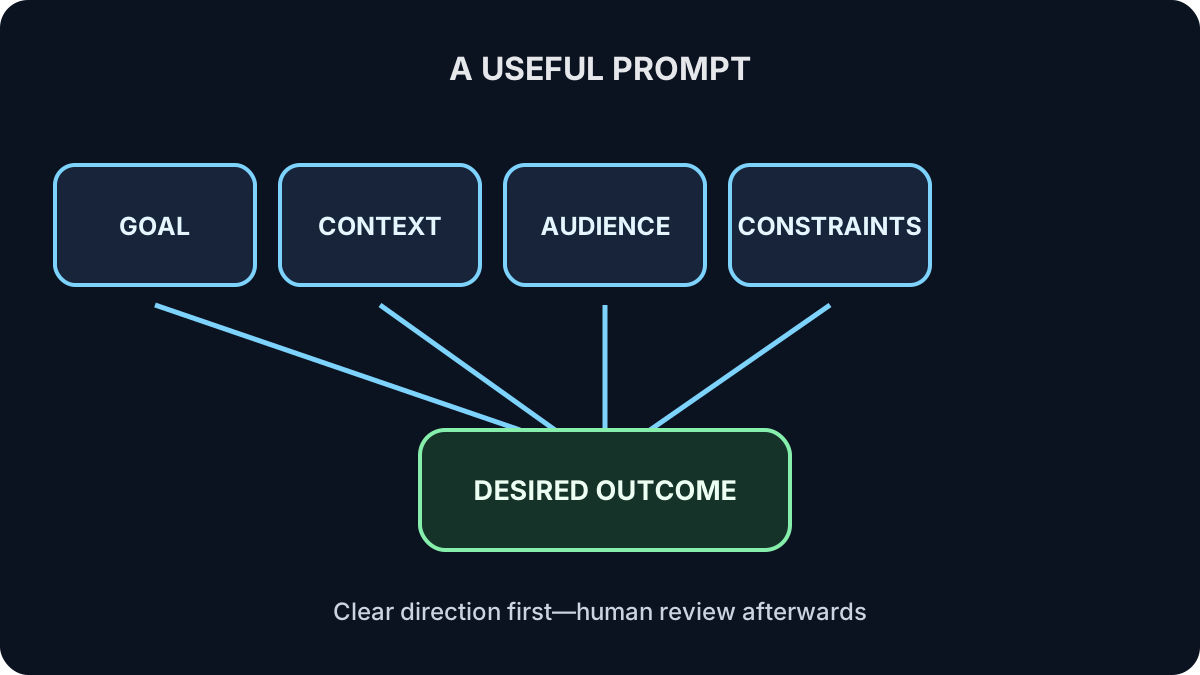
Whenever you're unsure what to include, think about these five things.
1. Goal
What do you want the AI to do?
2. Context
What background information does it need?
3. Audience
Who is the response for?
4. Constraints
Should it be formal, short, technical, or follow a particular format?
5. Outcome
What would a successful response look like?
You won't always need every one of these, but including more useful context almost always leads to better results.
Quick Knowledge Check
1. What is a prompt?
Answer
The instruction or information you give an AI.
2. Why does context help?
Answer
It reduces guessing by explaining the situation, audience and goal.
3. Does a detailed prompt guarantee a correct answer?
Answer
No. Better direction can improve relevance, but important claims still require verification.
What to Remember
Remember This
Good prompt engineering isn't about discovering secret commands.
It's about communicating with AI the same way you'd communicate with a helpful person who knows nothing about your situation.
Clear goals. Useful context. Realistic expectations.
The better the context you provide, the better the AI can help.
Next: Why AI Gets Things Wrong
Clear prompts improve relevance, but they do not make AI automatically accurate. The next lesson explains why verification matters.
Continue to Lesson 3 →